Understanding wavefront aberrations and how they apply to the eye is not essential knowledge for eye care practitioners in day to day practice, however when it comes to myopia management, ocular aberrations, particularly spherical aberration and coma, are increasingly being referred to or reported on in published research papers. In this article, I’ll help you understand how to interpret the literature on ocular aberrations and their relevance in myopia management.
在20波前畸变会显得复杂tand, however when broken down to core concepts a single wavefront is nothing more than a three dimensional shape that is frozen in time. The complexity comes down to how to describe the shape, and you already do this to some degree in your everyday practice! Sphere and cylinder are corrections for lower order aberrations and both of these are just shapes. A lens providing refractive power of -0.25D is cut from a very large sphere that is almost flat on its surface, while a -10.00D lens is cut from a much smaller sphere to provide a more curved surface. Imagine these as upturned bowls and the -0.25 is like a very large mixing bowl and the -10.00 is like a small dessert bowl. In both cases a complex spherical shape is being described by just one number!
Cylinder powers are the same, except when describing a basic cylinder there is now a flat edge and a curve in just one meridian. Again this seemingly complex shape can be described by a single number, the radius of curvature along the curved meridian or its power if a refracting surface. By combining sphere and cylinder we can define an even more complex shape with different curvature along two meridians described by two numbers. The overall steepness of the surface is described by the sphere value, with a higher number describing an overall steeper surface, and the cylinder power defining how one meridian deviates from the spherical surface.
当以数值形式描述时,高阶畸变无非是逐渐增加遵循类似系统的复杂性的形状。对于每个波前快照,唯一需要完成的事情是计算波前内存在的每种形状的量或加权,其权重通常以被测量的波前波长为单位。好的,我承认这听起来很难尝试学习外语,并且计算单个波前形组件的加权非常复杂,但是计算机软件会照顾这种复杂性,并会很高兴地淘汰一系列的一系列波前数字到您投掷的任何表面。您只需要能够解释数字,在这种情况下,您需要记住的只是零的加权值意味着没有任何形状 - 就像零的圆柱能力一样,都表明没有散光,而且,增加的加权越来越高,表明波前中存在更多的形状。
Zernike representation
有许多数学函数可用于描述复杂的表面,但是在波前分析方面,经常使用的一系列形状由所谓的Zernike多项式表示。幸运的是,您无需了解Zernike多项式的数学构建体即可了解它们如何代表波前的形状。它们只是一系列形状,简单,而您需要可视化的只是每个Zernike多项式所代表的形状。
Conveniently, each polynomial can be identified by a single number, and the good news is that when it comes to eyes, and particularly myopia control, you only really need to concentrate on two of them - spherical aberration (Z12) and coma (Z7 & Z8).
球形像差(Z12)
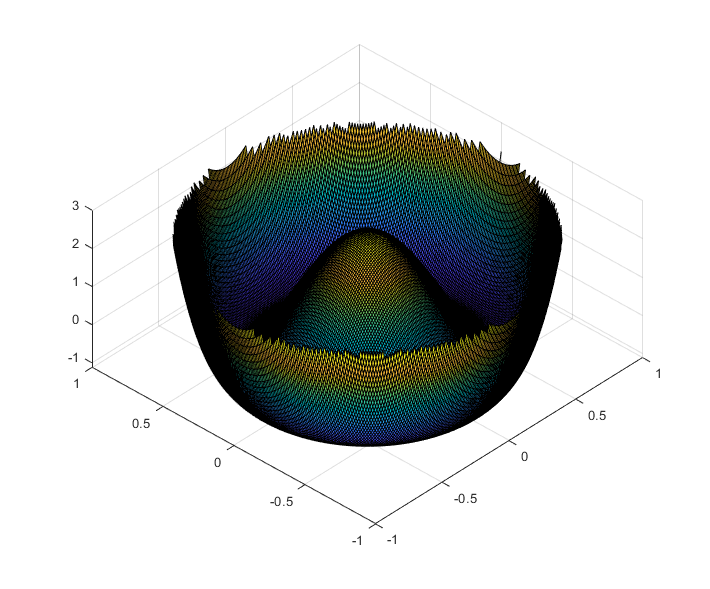
与先前描述的没有唇部的球形形状相比,球形像差可以被认为是像碗一样的形状(请参见下图)。您还会通过查看左图,注意到碗颠倒,这是引入负权重值的地方。添加负符号表示形状是倒的,而不是形状较少。因此,重量为0.5的球形像差将具有与-0.5重量球形异常相同的尺寸,除非在后一种情况下,图像将被倒置。
阳性球形畸变
Negative spherical aberration
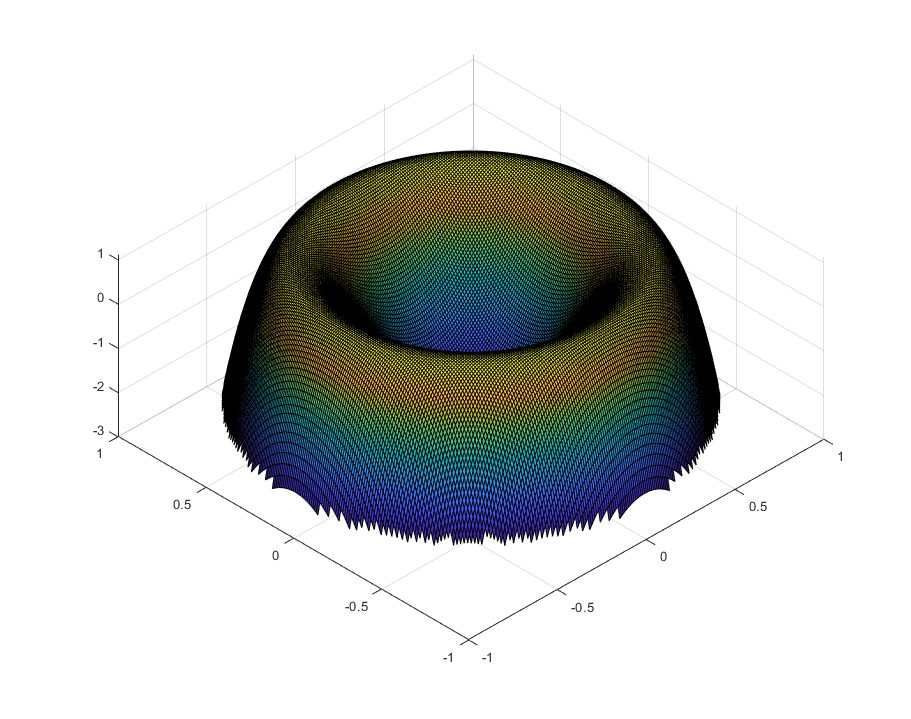
Like a sphere, spherical aberration is what’s classed as a rotationally symmetrical aberration - if you image a slice (section) through the shape and then spin it around its central axis by any amount and take a second section image, both sections will look the same. A cylinder on the other hand changes shape as you spin it around, meaning that it is a non-rotationally symmetrical surface. More in this shortly when we dive into coma, but before we concede this aspect, the measurement aperture (also known as pupil size) of the wavefront needs to be understood.
孔径的重要性(瞳孔大小)
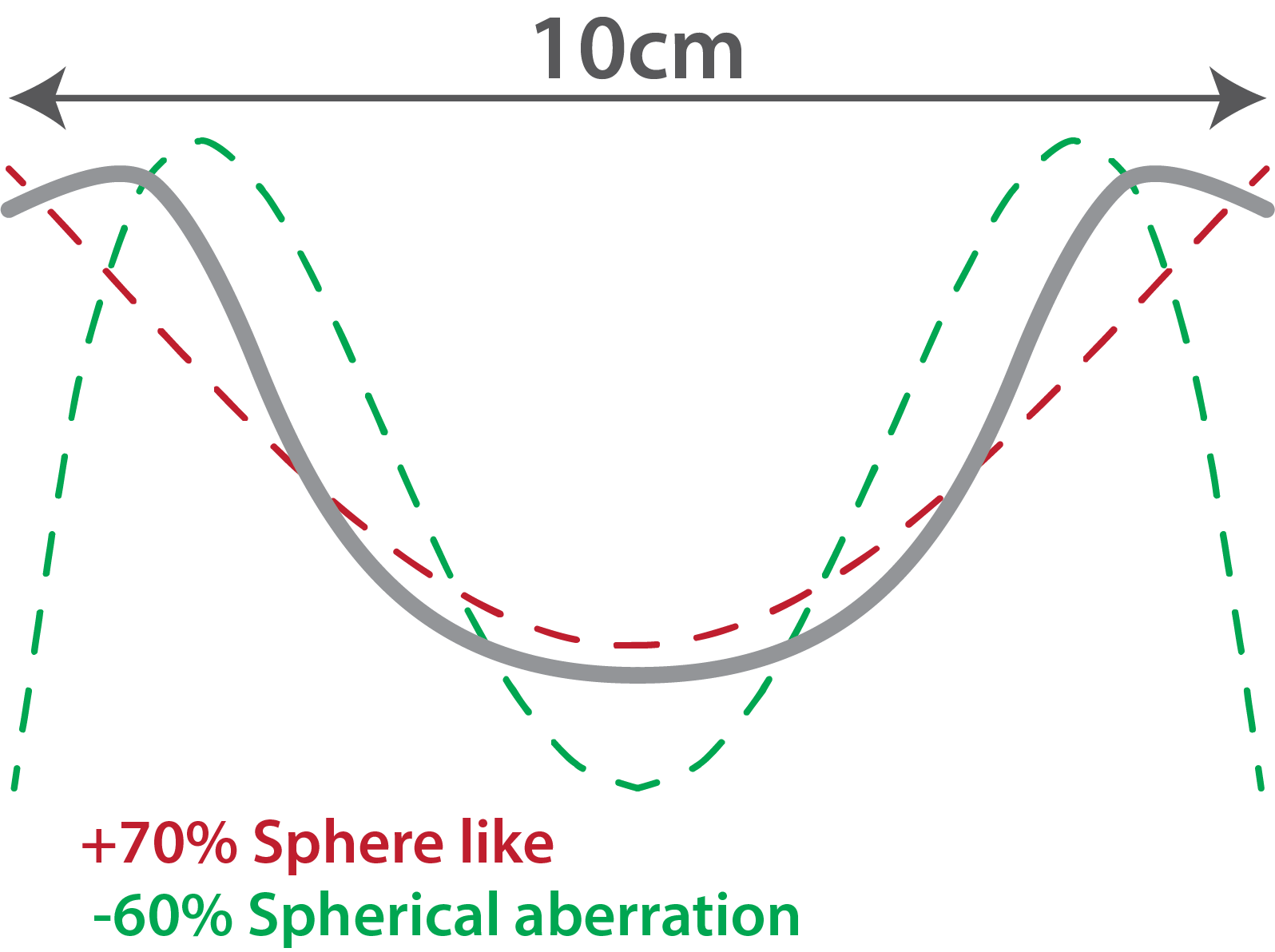
Zernike Wavefront形状是通过单位圆(Aperture/Pupil)计算的。在球形像差的情况下,这很重要,因为瞳孔直径决定了球形像差碗型唇唇刚刚描述的跌落的位置。想象一下一个带有大嘴的甜点碗,即直径为10厘米,您被要求使用Zernike术语来描述。You would start by working out how much of the bowl could be represented by a sphere - lets say arbitrarily that the bowl is around 70% like a sphere - it’s sphere weighting is 70% - now I know I talked about wavelength units earlier, but there we were considering wavefronts. Here we are instead talking about a dessert bowl, so 70% spherical weighting, bear with me.
Next up we work out how much of the bowl looks like the spherical aberration (Z12) shape. In this case the bowl has a big lip, so maybe it has 60% weighting of spherical aberration, but remember what we have already said about shape. To make spherical aberration look like a bowl we need to invert the shape, so in this case the weighting would be recorded as -60%. Now we are in a position to be able to call any dessert bowl making factory that understands Zernike notation and ask them to make a bowl that is 10cm in diameter, with 70% spherical weight and -60% spherical aberration weight, and they would do a reasonable job of re-creating the bowl just from telling them these numbers, while you quietly reflect on the amazingness and wonder of Zernike polynomials! Well not quite because you still need to get your head around how pupil size affects these measurements.
现在,让我们放一个同一个碗,除非我们现在只考虑直径的中央6厘米 - 想象您正在从顶部看碗,这是一个带有6厘米孔的卡片。同一碗,我们只是将形状评估光圈从10厘米降低到6厘米。现在,当我们应用Zernike形状描述符时,我们仍然可能会说碗甚至更像一个球体,因此体重的重量为90%,但是现在,在评估球形异差形状的加权时,我们缺少具有唇部在评估较小的6厘米光圈上被遮盖了。现在,由于没有唇部,我们的球形畸变量较小,为了争论,假设重量仅为-10%(请记住,负值只是意味着形状已经倒置)。
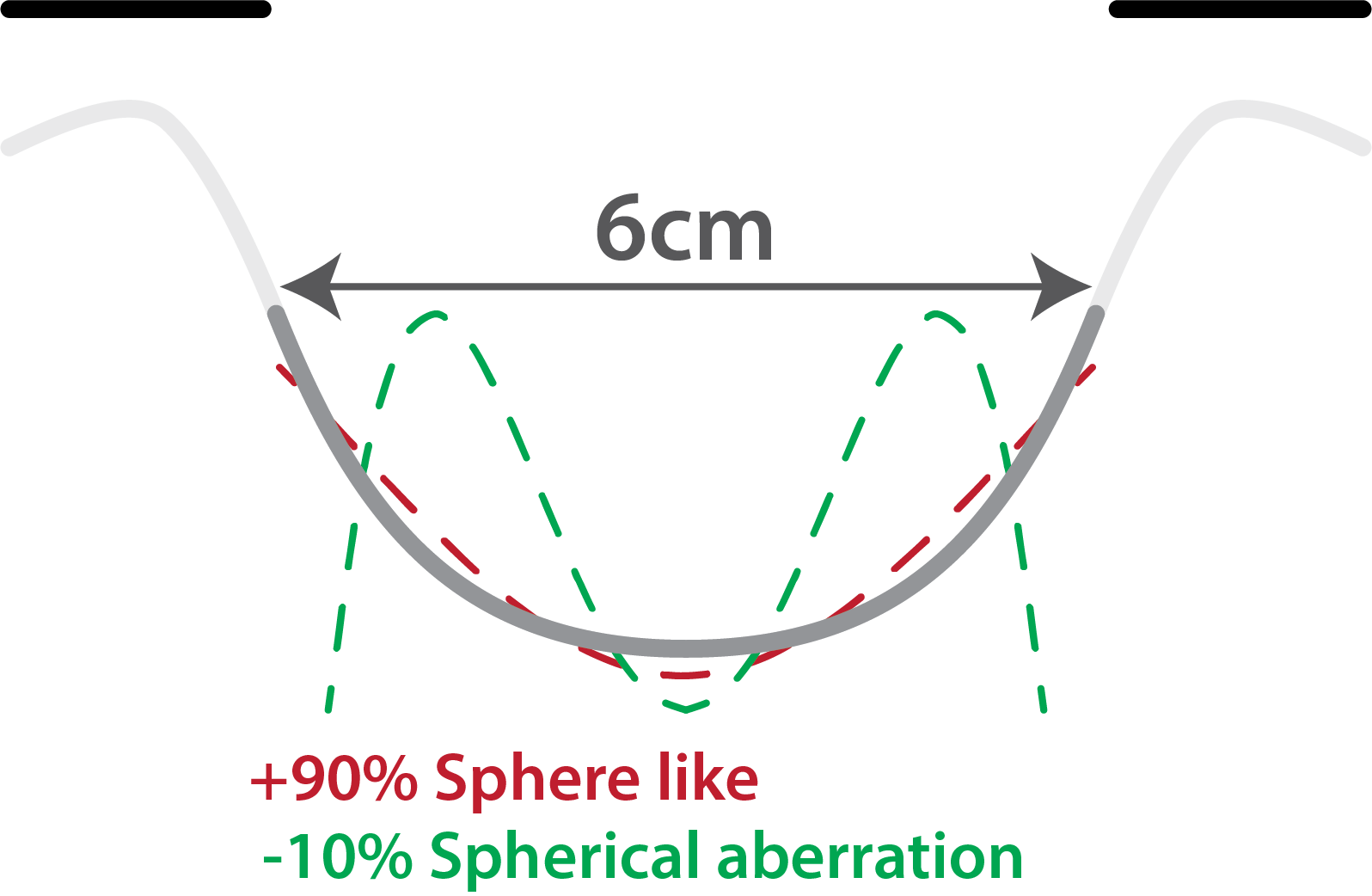
Same bowl and same shape descriptors,只是在直径10厘米的情况下测量时,球形像差形状的重量为-60%,直径在6厘米的直径上,重量仅为-10%。同样,球体等级从直径为10厘米的70%增加到直径6厘米时的90%。我到达这里真正重要的一点是,至少在使用Zernike多项式描述时,畸变是毫无意义的描述符,如果未陈述学生的大小。If we called up our fictitious bowl maker from earlier and just told them the Zernike numbers without telling them the diameter, they wouldn’t know how large to make the bowl.
球形像差可以说是在近视管理中理解的最重要的眼像畸变,但是这篇文章开始变得太长了。潜入以下帖子以了解更多信息 -Understanding Spherical Aberration和Spherical aberration, accommodation and multifocal soft contact lenses。
Coma (Z7 & Z8)
昏迷以两个Zernike术语表示,因为COMA描述了非旋转对称形状(随着形状在其中央轴旋转时,通过形状变化的切片),因为您使用非 -每次开处方缸功率时,旋转对称的形状描述符。您可以定义圆柱体的重量(其功率)及其方向(轴) - 换句话说,您已经擅长使用两个数字来定义非旋转对称表面的形状。当涉及到波兰时,这只是略有不同 - 当我们走另一个侧轨时,请忍受我,这次是折射缸功率的矢量表示。
折射的矢量表示
As eye care practitioners we are used to axis notation when defining cylinder orientation, but a different way that cylindrical surfaces can be defined is by how much cylinder power exits in the horizontal/vertical meridian and how much cylinder power exists in the oblique (45°/135°) meridians. These meridians in vector refraction representation are given the terms J180 and J45. Using this notation a cylinder with axis 180° would all be weighted in the J180 term with no weight in the J45 term, and a cylinder with axis 45° would all be weighted in the J45 term with no weight in the J180 term. Cylinder axes in-between have proportional weighting, so a cylinder with axis 22.5° would have identical weight in J180 and J45, and a cylinder with axis 30° would have 2/3 of weight in J45 and 1/3 in J45.
显然这对堤防符号是不切实际的ing cylinder in a refraction, but it does make for an easier descriptor when comparative consistency is needed, for example when wanting to apply statistical analysis, because J180 and J45 use the same descriptor. In this case both are measured in diopters, while the notation used in practice uses diopters (power) and degrees (axis). It’s easier to make comparisons across different people if the same descriptors are used, which is why vector representation is typically described in research papers, but I digress.
回到昏迷
昏迷就像散光,这是一种非旋转对称形状-Z7描述了垂直子午线中存在多重的形状,Z8描述了水平子午线中存在昏迷形状的重量。昏迷本身就像一个偏斜的丘疹 - 见下文,重量确定在描述的波前中有多少丘疹。昏迷的昏迷值零表示在波前中根本看不到形状,并且随着昏迷重量的增加,丘疹的形状变得更加明显。
Z7昏迷
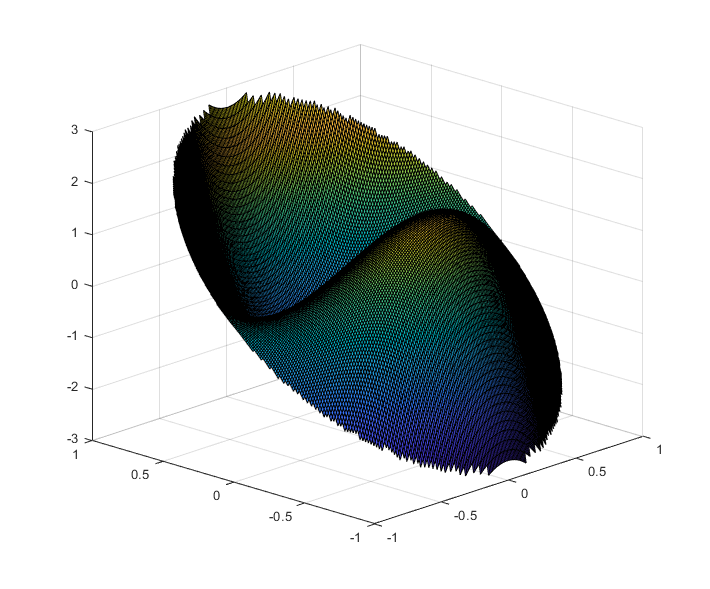
Z8 Coma

Just like spherical aberration, coma is also affected by pupil size - assessing a wavefront over a smaller pupil size will move the coma ‘pimple’ closer to the optical axis, and assessing over a larger pupil size will move the coma ‘pimple’ further from the optical axis.This further illuminating why Zernike defined wavefront terms are meaningless without know the pupil diameter they have been assessed across.
Total aberrations
A weighting value for total aberrations is simply achieved by summing the absolute values (any negative signs removed) of the individual Zernike polynomial weights - a higher number indicating greater complexity in the overall shape of the wavefront. For this reason wavefronts measured across larger pupil diameters tend too, though not always, exhibit higher amounts of aberration. Higher total wavefront aberrations with increasing pupil diameter can also be explained by larger pupils containing a larger surface area - so more area over which deviation can occur. Once again this highlights the importance of indicating the pupil sized that was used during measurement when displaying wavefront aberration values. Sorry that I keep banging this drum, but I’ve sadly read too many scientific posters and papers reporting on wavefront aberrations in some form that have not included the pupil diameter that was used thereby rendering the reported analysis meaningless.
Ocular aberrations
眼睛是非常强大的折射设备,因此,由于有多少像差(偏差),因此波前表面通常非常陡峭 - 它们看起来粗略看起来像一个球体。这意味着它们的整体形状的很大一部分可以描述为像个球体一样,正如我们已经讨论过的,您已经善于可视化这一点,因为在考虑球形折射时,您每个工作日都可以做到这一点。
人眼中也存在合理数量的球形畸变,这使事情变得更有趣,随着住宿而有所不同。一些多灶性隐形眼镜故意操纵球形像差,以增加长期校正的重点深度。尽管在大多数高阶波前畸变的情况下,这里都有微妙的平衡,更高的加权往往会导致与理想的焦点更大的偏差。诱发太多的球形畸变和增加焦点的益处会丢失到太多的图像失真中。阅读有关球形畸变的更多信息Understanding Spherical Aberration和Spherical aberration, accommodation and multifocal soft contact lenses。
Coma is typically less apparent than spherical aberration, but varies across individuals and tends more towards distorting quality of vision. Some people have a slightly displaced corneal apex meaning that their line of sight crosses to the side of the corneal apex. These register as coma because they partially fit the displaced ‘pimple’ effect I described earlier, where the pimple is the apex of the cornea. In more extreme cases, like keratoconus, the ‘pimple’ is more pronounced and more displaced leading to higher amounts of coma. Understanding this association with keratoconus hopefully helps visualise why coma tends create a negative effect on quality of vision, with higher amounts of coma creating greater distortion to vision.
概括
If you have read this far you should now have sufficient understanding on how to interpret wavefront aberrations and be able to form an understanding of their interaction when mentioned in research papers. Throughout this post I have included links that will direct you to posts that dive deeper into understanding higher order aberrations. Otherwise the main take home messages are that wavefront aberration measurements are just shape descriptors and always keep in mind that the pupil diameter over which the wavefront was assessed is an essential characteristic that can not be omitted.
进一步阅读我们关于畸变的科学系列

About Paul
保罗·吉福德博士是位于澳大利亚布里斯班的研究科学家和行业创新者,也是Myopia Profile的联合创始人。